Your AI Assistant Forgets Everything. Memory Layers Fix That
Your agent forgets everything between sessions, and config files only hold the rules you knew to write down in advance. Here's what a memory layer actually does, and what happened when I wired mem0 into Claude Code and let it run on its own.


One issue AI agents face is persisting knowledge and context across sessions without losing anything along the way.
Config files helps such as CLAUDE.md, AGENTS.md,or a custom rules file. They cover the stable things you already know you want the agent to have, and for a lot of work that's enough.
But what happens when the agent needs more than a page of rules? Your product architecture. The decisions you made and why you rejected the alternatives. Summaries of team discussions. The constraint someone raised in a meeting three weeks ago that still shapes what you build.
You can't fit that in a config file. And even if you could, the agent would be reading all of it on every request, whether the current task needs it or not.
The model itself can't help here, since it holds nothing between calls. So the fix has to live in the layer that decides what to send it.
What a memory layer actually is
This is what memory layers solve.
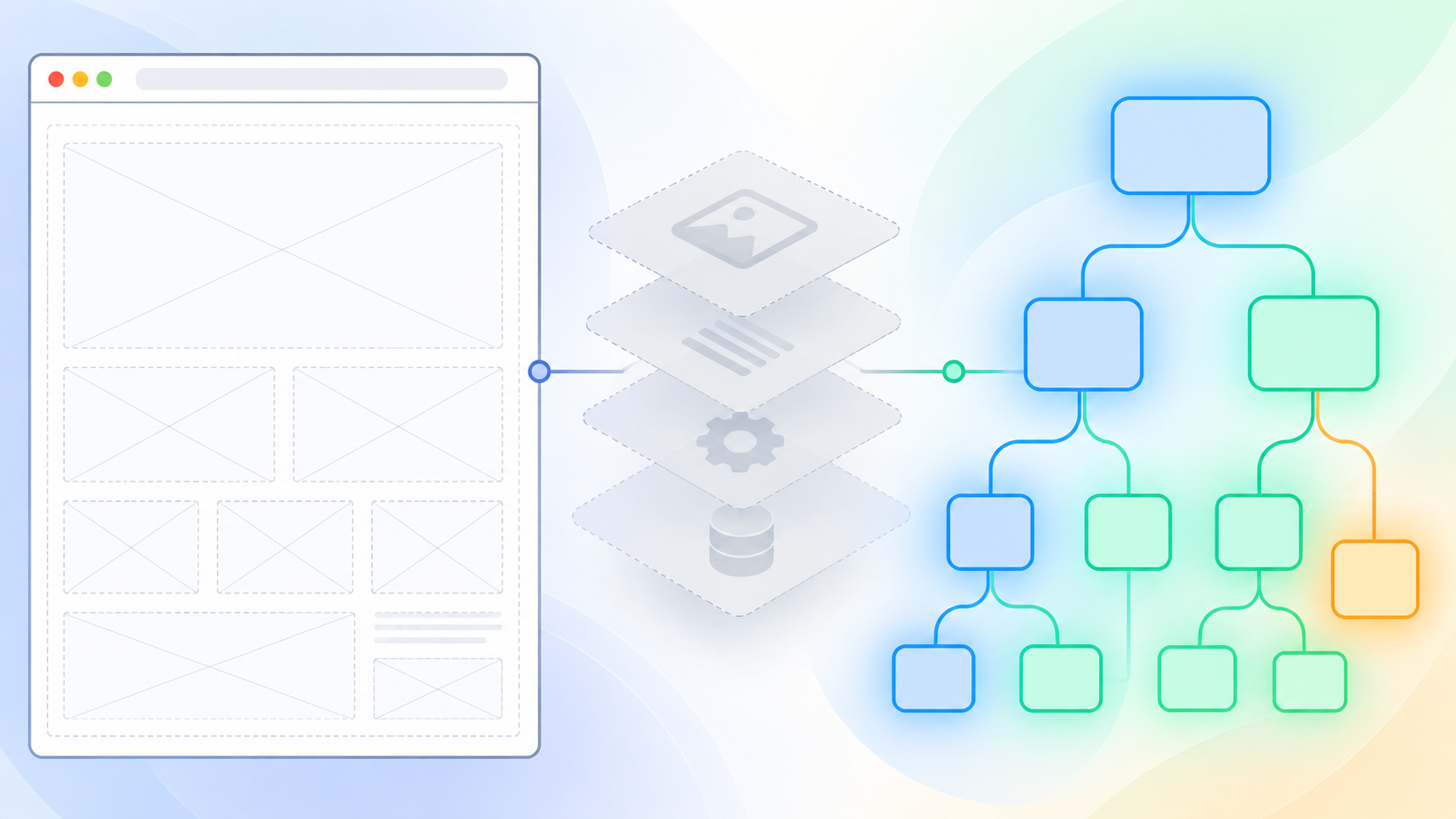
A memory layer sits between your agent and the model, and every message passes through it twice.

On the way in, it takes your question, searches your stored knowledge, and pulls out the few pieces that are actually relevant. Those get added to the prompt before the model sees it.
On the way out, it reads what happened in the exchange and decides whether anything new is worth keeping.
The model stays stateless through all of this. It still remembers nothing between calls. What changes is that it now gets the right background along with your question, so it answers like something that already knows your project.
The difference from a config file comes down to selection. A config file sends everything, every time. A memory layer holds far more and sends only what the current request needs.
So you can store your entire architecture, every decision, and months of discussion summaries, and still keep each prompt small.
How the pieces connect
You ask something. Before it reaches the model, the memory layer searches your stored knowledge and finds the pieces that relate to your question. Those get added to the prompt. The model answers. Then the layer looks at the exchange, pulls out anything new worth keeping, and writes it to storage.
Two parts of that are worth understanding, because they explain most of what these tools do.
The layer uses an LLM to decide what to store. It does not save your chat transcript. It reads the exchange and rewrites it as clean, standalone facts. You might say "yeah we moved off Mongo last quarter, Postgres has been fine," and what gets stored is project uses Postgres, migrated from MongoDB. Short, self-contained, and useful later without the surrounding conversation.
Retrieval is not keyword search. Say a fact reads project uses Postgres, migrated from MongoDB, and later you ask "what database should I use here?" The word "database" appears nowhere in that fact. Keyword matching finds nothing.
Memory layers use embeddings instead, which compare meaning rather than words. "Database" lands near "Postgres" because they are related concepts, so the fact surfaces even with no shared words. Most tools combine this with keyword search, since embeddings are weak on exact terms like error codes and package names.

That leaves the question of where all this runs, which is where you have a choice. Hosted, where the provider handles storage and the LLM calls. Self-hosted, where you run it on your own infrastructure. Or as a library inside your app, where you supply the model keys yourself.
Same architecture in all three. The difference is who operates it and which keys you need.
Trying it: mem0 with Claude Code
Enough theory. Mem0 is one of the more established options here, and it works with Claude Code, Codex, Cursor, and anything else that supports the skills standard. Claude Code is the example below, but nothing about the setup is specific to it.
The fastest path is the CLI:
npm install -g @mem0/cli      # or: pip install mem0-cli

mem0 init --agent --agent-caller claude-code

That second command is worth pausing on. It mints a working API key immediately, with no email, no dashboard, and no signup flow. You can claim the account later with mem0 init --email <your-email>, and it keeps the same key along with everything you have stored by then.
Going this route means mem0 handles the LLM calls for extraction and embedding, so you do not need an OpenAI key of your own.
Let's quick test this...
mem0 add "I am using mem0"
mem0 search "am I using mem0"

To let Claude Code work with mem0 directly, add the skills:
npx skills add https://github.com/mem0ai/mem0 --skill mem0
npx skills add https://github.com/mem0ai/mem0 --skill mem0-cli

These load mem0's SDK knowledge into the assistant's context, so it knows the commands and the API without you explaining them.
If you would rather run it inside your own application, there is a library:
pip install mem0ai
The library defaults to gpt-5-mini for extraction and text-embedding-3-small for embeddings, both of which need an OpenAI key. Other providers are configurable. There is also a self-hosted server via docker compose up if you want the whole thing on your own infrastructure.
Wiring it into Claude Code
Everything so far has been manual. You type mem0 add, you type mem0 search. That is fine for understanding the mechanism and useless as a daily workflow.
The plugin closes that gap. In Claude Code:
/plugin marketplace add mem0ai/mem0
/plugin install mem0@mem0-plugins
That installs an MCP server, the SDK skill, and a set of lifecycle hooks. The hooks are what make memory happen without you asking for it.
On session start, it loads your existing memories. On every prompt you submit, a hook runs before your message reaches the model and injects whatever is relevant, with an eight second timeout. When the agent reads a file, another hook pulls in what you have stored about that file. When the session stops, a summary hook runs with a thirty second budget and decides what from the session is worth keeping. Shell command output gets captured too.
So the loop runs on its own. Retrieval before each prompt, extraction when the session ends, and you never type a mem0 command again.
One thing to know before installing. The plugin expects an API key from the dashboard, starting with m0-, set as MEM0_API_KEY in your shell profile. That is different from the agent signup used earlier, which mints a key with no email at all. Both work, and an agent key can be claimed later without losing anything you have stored.
Letting it run on its own
Let's check how this works with Claude Code.
I set up a small Flask app and told the agent two things in passing:
we use uv for everything in this project, not pip or venv directly. also keep routes in app.py, don't split into blueprints, it's a small app

Here you can see Claude Code calling the mem0 skill and writing the memory.
Let's confirm it landed using the mem0 CLI:
mem0 search "python tooling preferences"

Both points are there.
Now clear the old Claude Code chat, start a fresh one in the same directory, and ask something that mentions neither preference:
add a delete endpoint and a test for it

The status line shows the memories loaded. The agent looked at the project and edited app.py directly. No blueprint, no restructuring, no asking.
The preference from a session that had already ended shaped what it did in a session that knew nothing about it. That is the whole idea working end to end.
What it actually costs
Before wiring a memory layer into your daily workflow, it is worth being honest about the trade-offs.
Every turn carries extra latency. A retrieval call fires before your message reaches the model, and an extraction pass runs when the session ends. My searches took around two seconds against just six stored memories - and that is the floor, not the ceiling. Those eight-second and thirty-second timeouts on the lifecycle hooks exist for a reason.
Storage only accumulates. Nothing prunes itself. The architectural decision you reversed three weeks ago sits in the database right alongside your current setup, stated with the exact same confidence as the rule you follow today.
Is it worth setting up?
A memory layer is a quiet piece of infrastructure that fundamentally changes how much explaining you do. Setting it up took under an hour - most of it lost navigating API keys that neither README explicitly clarifies - and the payoff was immediate on the very next session.
It isn't magic. It stores facts you wouldn't have manually chosen, occasionally keeps conflicting notes, and becomes harder to evaluate as storage fills up. None of that is a reason to avoid it. It just means you need to audit what it keeps every so often, the same way you would monitor any database that grows on its own.